
Why a Struggling AC Doesn’t Always Mean the Same Thing
An air conditioner that runs but doesn’t cool well enough is one of the more confusing home repair situations, because the unit isn’t broken. It’s just underperforming. That ambiguity is exactly why a lot of homeowners hesitate before calling anyone. Is this a small fix, or is someone about to try to sell a new unit that isn’t actually needed?
The honest answer is that it depends on what’s actually wrong. Some causes of poor AC performance are quick, inexpensive fixes. Others point toward a bigger problem that no amount of repair work will solve for long. Most HVAC services fall into one of two categories: things a technician can diagnose and repair on the spot, and things that point toward a larger issue. Knowing the difference before you call helps you ask better questions and recognize a straight answer when you hear one.
What HVAC Services Can Fix
A properly trained technician can resolve most common causes of an air conditioner underperforming. These are the issues that typically respond well to repair.
Refrigerant Leaks
Low refrigerant almost always means a leak somewhere in the system, not normal wear. A technician can locate the leak, repair it, and recharge the system to the manufacturer’s specification. When left alone, low refrigerant levels force the compressor to work harder and can shorten its lifespan.
Dirty Evaporator or Condenser Coils
Coils covered in dust and debris can’t transfer heat efficiently, which makes the whole system work harder to reach the same temperature. A thorough coil cleaning often restores a noticeable amount of cooling capacity almost immediately.
Failing Capacitors or Fan Motors
Capacitors give the compressor and fan motors the jolt of power they need to start. When a capacitor weakens, the system may struggle to start, run intermittently, or hum without actually cooling. Capacitors and fan motors are both straightforward, affordable parts to replace.
Thermostat Issues
Sometimes the AC unit itself is working fine, and the real problem is a miscalibrated or failing thermostat sending the wrong signals. This is one of the simplest and least expensive fixes available.
Clogged Drain Lines
A clogged condensate drain line can cause water backup, trigger a safety switch that shuts the system down, or lead to humidity problems indoors. Clearing the line usually resolves the issue completely.
Duct Leaks
Leaky or disconnected ductwork lets cooled air escape before it reaches your living space, which can make a perfectly healthy AC unit feel underpowered. A common sign is a noticeable temperature difference between rooms, or air that feels weak coming out of the vents, even though the system sounds like it’s running normally. Sealing or repairing the ducts often makes a bigger difference than people expect, sometimes more than any adjustment to the unit itself.
What an HVAC Service Technician Checks During a Visit
Most thorough visits follow a similar process. An experienced HVAC service technician isn’t simply looking to see whether the system turns on. The goal is to identify why the air conditioner isn’t cooling properly and determine whether the issue can be repaired.
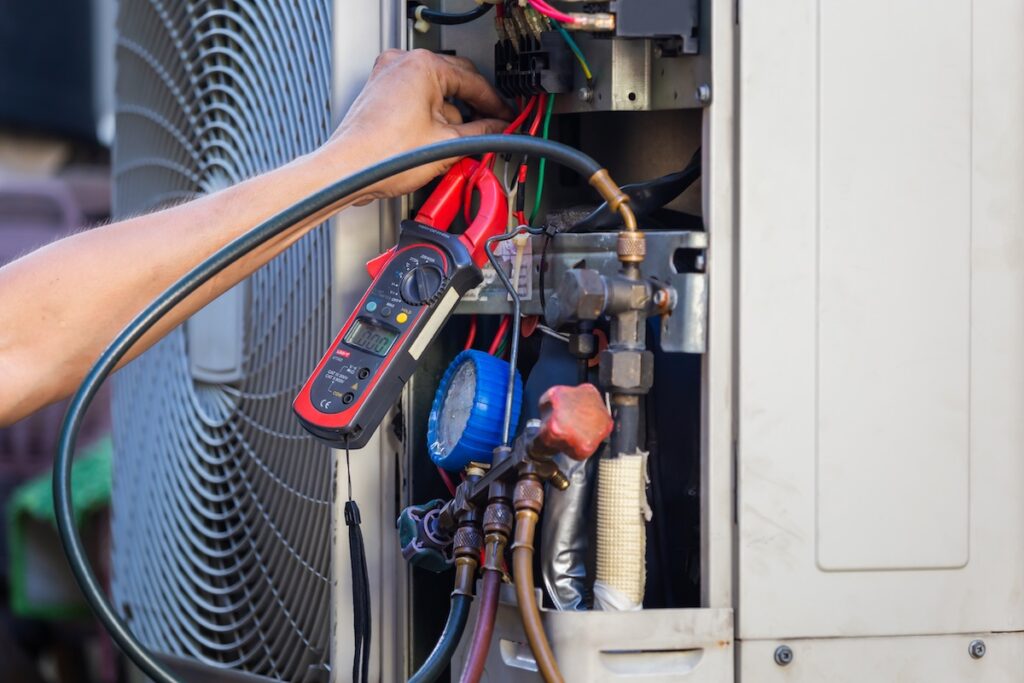
During a diagnostic visit, a technician will typically inspect the following:
- Refrigerant levels and pressure to determine whether the system is low on refrigerant or has a potential leak
- Evaporator and condenser coils for dirt, debris, or buildup that may be restricting heat transfer and reducing efficiency
- Capacitors, contactors, and other electrical components that help the system start and run properly
- Fan motors and blower components, to make sure air is moving through the system as intended
- Thermostat settings and calibration, to confirm the system is receiving accurate temperature readings
- Condensate drain lines for clogs that could cause water backup, shutdowns, or performance issues
- Air filters that may be restricting airflow throughout the home.
- Supply and return ductwork to identify leaks, disconnected sections, or airflow restrictions.
- Overall system performance, including temperature differences between supply and return air.
This type of inspection helps determine whether the problem is something relatively straightforward, such as a dirty coil or failing capacitor, or whether a larger issue is affecting the system’s performance.
A trustworthy HVAC service technician should be able to explain what was found, what it means for the system, and whether a repair is likely to solve the problem. That conversation is often more valuable than the repair itself because it gives homeowners the information they need to make a clear-headed decision rather than feeling pressured into one.
When Repair Helps, and When Replacement Is the Honest Answer
Not every underperforming AC problem ends with a repair, and a technician who says so upfront is doing you a favor. A few signs point toward replacement being the more honest recommendation:
- The unit is older than 12 to 15 years and has already had multiple repairs.
- The system uses R-22 refrigerant, which has been phased out and is now expensive and hard to source.
- The cost of the repair approaches half the cost of a new, more efficient system.
- The unit consistently struggles to reach the set temperature even after previous repairs.
None of these signs means repair is automatically off the table. They mean a straightforward comparison of repair cost against replacement value is worth having, instead of sinking money into a system that’s already near the end of its useful life.
It helps to think about this as a trend rather than a single decision. An AC unit that needed one repair last year and now needs a different one this year isn’t unlucky. It’s telling you something about where it is in its lifespan. Each repair might look reasonable on its own, but added together over two or three years, the total can end up costing more than a new, more efficient unit would have, while still leaving you with an older system that uses more electricity to do the same job. That’s the kind of pattern worth asking about directly the next time a technician is at the house.
Whatever the diagnosis, the goal of good HVAC services is to give you an honest read on which category your AC falls into, not to steer you toward the most expensive option by default.
Where an HVAC Service Agreement Fits Before Peak Season
Many of the issues above are far less expensive to address early than after they trigger a breakdown. That’s one reason many homeowners invest in an HVAC service agreement before the busiest summer and winter months. These scheduled visits allow technicians to inspect refrigerant levels, electrical components, coils, and airflow, helping identify small issues before they turn into costly repairs.
Many maintenance plans also include priority scheduling, which becomes especially valuable during the first major heat wave or cold snap of the season when service demand is at its highest. Regular inspections can uncover problems such as a weakening capacitor or a slow refrigerant leak, while repairs are still relatively simple and affordable.
Scheduling regular HVAC maintenance service is one of the simplest ways to avoid discovering a bigger problem during the hottest week of the year.
Why the Right HVAC Services Include Checking Airflow, Not Just the Unit
Sometimes the AC unit itself is working exactly as it should, and the real problem is everything air travels through before and after it reaches the unit. Leaky ductwork, blocked vents, and poor attic insulation can all make a healthy system feel weak. If an attic isn’t properly insulated, cooled air can lose ground to outside heat before it ever settles into the living space, which shows up as the same symptoms as a struggling AC unit: rooms that never quite reach the thermostat’s setting, and a system that runs constantly without much to show for it.
This is why a thorough visit typically looks past the unit itself. The right HVAC services address the whole system, not just the compressor and coils, because a perfectly repaired AC unit still won’t perform well if the cooled air it produces is escaping somewhere else.
Get a Straight Answer About Your AC’s Performance
If your AC has been underperforming and you’re not sure whether it needs a repair, a tune-up, or something bigger, that’s exactly what a diagnostic visit is for. A qualified technician can walk through the system, identify the root cause of the issue, and give you a clear picture of your options before any work begins.
Service HQ offers free estimates and responds to quote requests within 24 hours. Schedule a free estimate or call (316) 425-5098 to find out what’s going on with your system.